Commercial food service spaces along Highway 17 and waterfront corridors like Shem Creek encounter acute pest pressures driven by Mount Pleasant's sustained 80% summer humidity and proximity to tidal marshlands.…
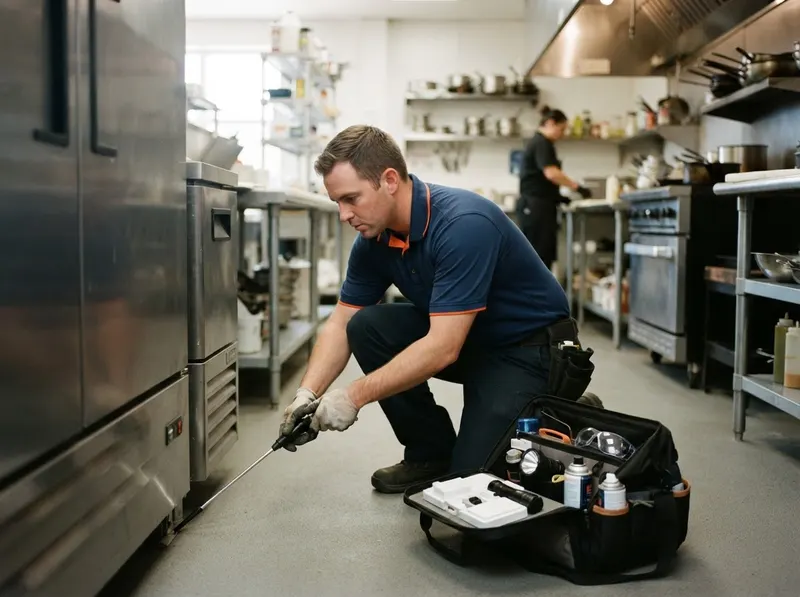
Commercial food service spaces along Highway 17 and waterfront corridors like Shem Creek encounter acute pest pressures driven by Mount Pleasant's sustained 80% summer humidity and proximity to tidal marshlands. Standard residential sprays fail rapidly in these spaces because high heat from commercial cooktops, daily washdowns with alkaline degreasers, and constant grease-vapor accumulation break down basic chemical barriers within 72 hours. Effective kitchen protection demands targeted sanitation protocols: non-volatile insect growth regulators placed behind stainless steel prep tables, enzymatic foam applied directly into trench drains to consume organic scum where drain flies breed, and mechanical sweeps installed along exterior receiving doors to block coastal marsh rats.
Decision guidance depends directly on the facility layout. Single-tenant retail properties in master-planned centers like Belle Hall or Park West generally require exterior rodent baiting stations anchored every 30 to 50 feet along the foundation wall combined with quarterly crawlspace vapor checks. In contrast, multi-station commercial kitchens in busy mixed-use developments near I'On or Carolina Park require bi-weekly structural monitoring and micro-encapsulated baits inside electrical chases, motor housings, and floor sinks. The practical trade-off centers on service frequency versus disruption: choosing an aggressive bi-weekly schedule involves small off-hours visits that eliminate pest introduction before health inspections, whereas choosing an extended monthly frequency saves immediate maintenance overhead but increases vulnerability when vendors deliver fresh produce pallets.
To begin service, the onboarding process follows three clear steps. First, an on-site technician performs a visual audit of water meters, dishwashing coves, drop ceilings, and refuse dumpsters to identify active migration points. Second, the technician applies low-odor, targeted barrier materials and biological drain enzymes while the kitchen is closed to food preparation, ensuring zero contamination of prep surfaces. Third, the business receives a comprehensive physical binder and digital logbook documenting chemical lot numbers, SDS sheets, device locations, and specific structural repairs needed to keep the facility fully compliant with South Carolina Department of Health and Environmental Control (DHEC) standards.
Every job gets a firm, written price after a free on-site visit.
Tell us about your commercial kitchen & property pest management job in Mount Pleasant and we'll send a clear, written quote, usually the same day.
 Harbor Pine Pest Control