Subterranean termites pose severe structural risks in coastal South Carolina, where sandy soils and elevated humidity along the Wando River and Horlbeck Creek create ideal nesting habitats. Properties in neighborhoods…
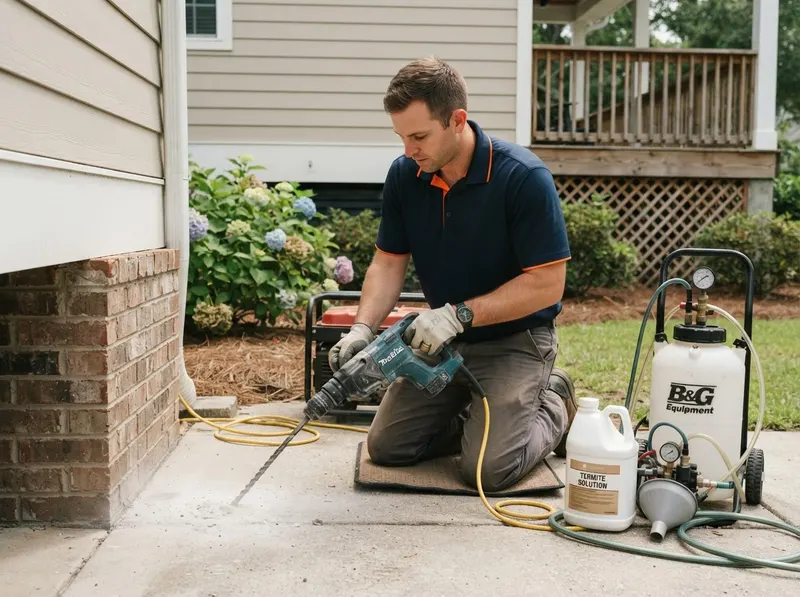
Subterranean termites pose severe structural risks in coastal South Carolina, where sandy soils and elevated humidity along the Wando River and Horlbeck Creek create ideal nesting habitats. Properties in neighborhoods like I'On, RiverTowne, and Old Village often feature raised foundations or historic pine framing that require specialized defensive measures. While native subterranean termites enter homes through soil contact, invasive Formosan subterranean termites build massive colonies that consume timber substantially faster. A complete perimeter defense pairs low-odor liquid barriers with precision crawlspace treatments, creating an undetectable continuous zone that workers track directly back to the subterranean nest.
Selecting the right system depends on your foundation design and immediate property goals. Liquid termiticide trenching binds directly to the soil along the exterior stem wall, providing continuous exclusion that halts active foraging instantly. In contrast, subterranean baiting systems use discreet ground stations installed flush every 10 to 15 feet around your lawn perimeter, which worker termites consume and distribute to eradicate the colony over several weeks. If live termites have already penetrated baseboards or sill plates, a targeted liquid perimeter delivers prompt structural isolation; if preventative protection is preferred without trenching established garden beds near Shem Creek Park or Boone Hall Plantation, exterior bait stations offer non-disruptive, odorless monitoring. The trade-off centers on application impact versus eradication speed: liquid applications demand slight trenching through mulch beds but safeguard the perimeter immediately, whereas bait systems preserve landscaping entirely while taking 30 to 90 days to achieve full colony collapse.
1. Initial assessment: A technician maps your foundation type, measures perimeter linear footage, and inspects crawlspace piers for shelter tubes. 2. Barrier installation: Soil is trenched 6 inches deep around foundation footings, infused with non-repellent termiticide, and backfilled. 3. Crawlspace and expansion sealing: Technicians treat critical plumbing penetrations and expansion joints where soil meets concrete slabs. 4. Annual monitoring: Scheduled perimeter evaluations verify that mulch migration, landscaping changes, or Lowcountry storm surges have not compromised the defensive barrier.
Every job gets a firm, written price after a free on-site visit.
Tell us about your subterranean termite treatment job in Mount Pleasant and we'll send a clear, written quote, usually the same day.
 Harbor Pine Pest Control